




The Mother of Jesus in the Gospel of John
Have you noticed where Mary, the mother of Jesus, appears in John’s Gospel? Given the legends that some believe about her (immaculate conception, bodily assumption, co-redemptrix, special appearances), in this short piece I want to observe where she appears in John’s Gospel and suggest some theological conclusions from those appearances.
Have you noticed where Mary, the mother of Jesus, appears in John’s Gospel? Given the legends that some believe about her (immaculate conception, bodily assumption, co-redemptrix, special appearances), in this short piece I want to observe where she appears in John’s Gospel and suggest some theological conclusions from those appearances.
Mary’s Role in John’s Narrative
Mary is an active participant in the events John narrates in only two places, and she is referenced in an off-hand way one other time (at John 6:42). John has strategically placed the two narratives in which Mary is an active participant across from one another in the chiastic structure of his Gospel, and in both Jesus addresses her as “Woman” (2:4; 19:26). Mary comes to Jesus at the wedding at Cana in John 2:1–11, and she is present when he is on the cross in John 19:23–30.
Mary appears in the second and second to last sections of John’s Gospel. John’s first chapter (John 1:1–51) stands across from the final section of the Gospel (20:19–21:25). The second major section of the Gospel spans chapters 2–4, beginning with the first sign on the third day in Cana of Galilee (2:1, 11) and ending with the second sign in the same place (Cana), also on a third day (4:43, 46, 54).
The second to last section of John’s Gospel runs from John 18:1–20:18, and it begins in the garden where Jesus asks the crowd that has come to arrest him whom they seek (18:1, 4), ending in another garden (19:41) where Jesus asks Mary Magdalene whom she seeks (20:15). The third and third to last sections of John’s Gospel span larger units: in the third, Jesus is in public at a series of feasts among the crowds (John 5–11); in the third to last he is in private, at the final Passover, with only his disciples (John 12–17).
John 1:1–51, Opening
John 2–4, From Cana to Cana
John 5–11, In Public, At Feasts, With Crowds
John 12–17, In Private, At Final Feast, With Disciples
John 18:1–20:18, From Garden to Garden
John 20:19–21:25, Closing
More could be said about the chiastic structure of John’s Gospel,[1] but in this article I want to focus on John’s portrayal of Mary, the mother of Jesus.
Right after Mary’s first appearance at the wedding in Cana (John 2:1–11), Jesus cleanses the temple (2:12–25), and when asked for a sign to demonstrate his authority (2:18), he says, speaking of his own body (2:21), “Destroy this temple, and in three days I will raise it up” (2:19). In the corresponding section of the Gospel, when Mary again appears in the narrative, the body of Jesus, the fulfillment of the temple, is being destroyed as he is crucified (19:23–30), after which he will be raised (20:1–18). Mary’s presence has a literary function in John’s Gospel. That she is in the narrative, that she is addressed as “woman” in both places (2:4; 19:26), indicates that John wants his audience to think about John 2–4 (where he predicts his own death and resurrection) in relationship with John 18:1–20:18 (where his death and resurrection is narrated).
Mary’s Role in Biblical Theology
What theological observations and conclusions can we draw from the two appearances of Mary in John’s Gospel?
First, taking nothing away from her significance as a human made in God’s image, her character as a member of the believing remnant, and her virtue as one who believed what was revealed to her by Gabriel and faithfully played the part assigned to her (Luke 1:26–56), note how small a part she plays in John’s Gospel. According to John, she contributes almost nothing to the adult public ministry of Jesus. She is not mentioned as John narrates the many signs Jesus did, the many teachings he delivered, the various disputes into which he entered. Mary is there at the wedding at the beginning, and she is there at the cross at the end. Otherwise, while she might have been present at various points in the history as it happened, John never mentions her in his literary portrayal of that history.
In 1854 the Pope Pius IX defined the immaculate conception of Mary as infallible dogma that all papists must believe. There is no foundation for this doctrine in John’s Gospel or anywhere else in the Bible.
In 1950 Pope Pius XII defined the bodily assumption of Mary as infallible dogma that all papists must believe. Here too, there is no biblical support for such a doctrine in John’s Gospel or the rest of the Bible.
Papists have various special places they visit as pilgrimage sites, some of which are made holy by “Marian Apparitions,” that is, post-mortem appearances of Mary. There is no indication in the New Testament that believers in Jesus should expect such special post-mortem visits from the mother of Jesus, nor does the New Testament give any indication that a “Marian Apparition” would serve in any way to advance the mission Jesus gave to his disciples.
If we teach people about Jesus from John’s Gospel, Mary is active in the narrative only twice, and on those rare occasions when she has a part in the story, Jesus remains the focus. She is relatively insignificant.
Recently I visited with an evangelical Christian who was converted to Christianity from Papism. One of the things that he noted was that when he began to read the Bible, he noticed how small a role Mary actually has in the New Testament, in contrast to what Papism teaches.
The real Mary, the mother of the Lord Jesus, would no doubt want the focus to be where John and the other New Testament authors put it—on Jesus, not on her.
From the Author
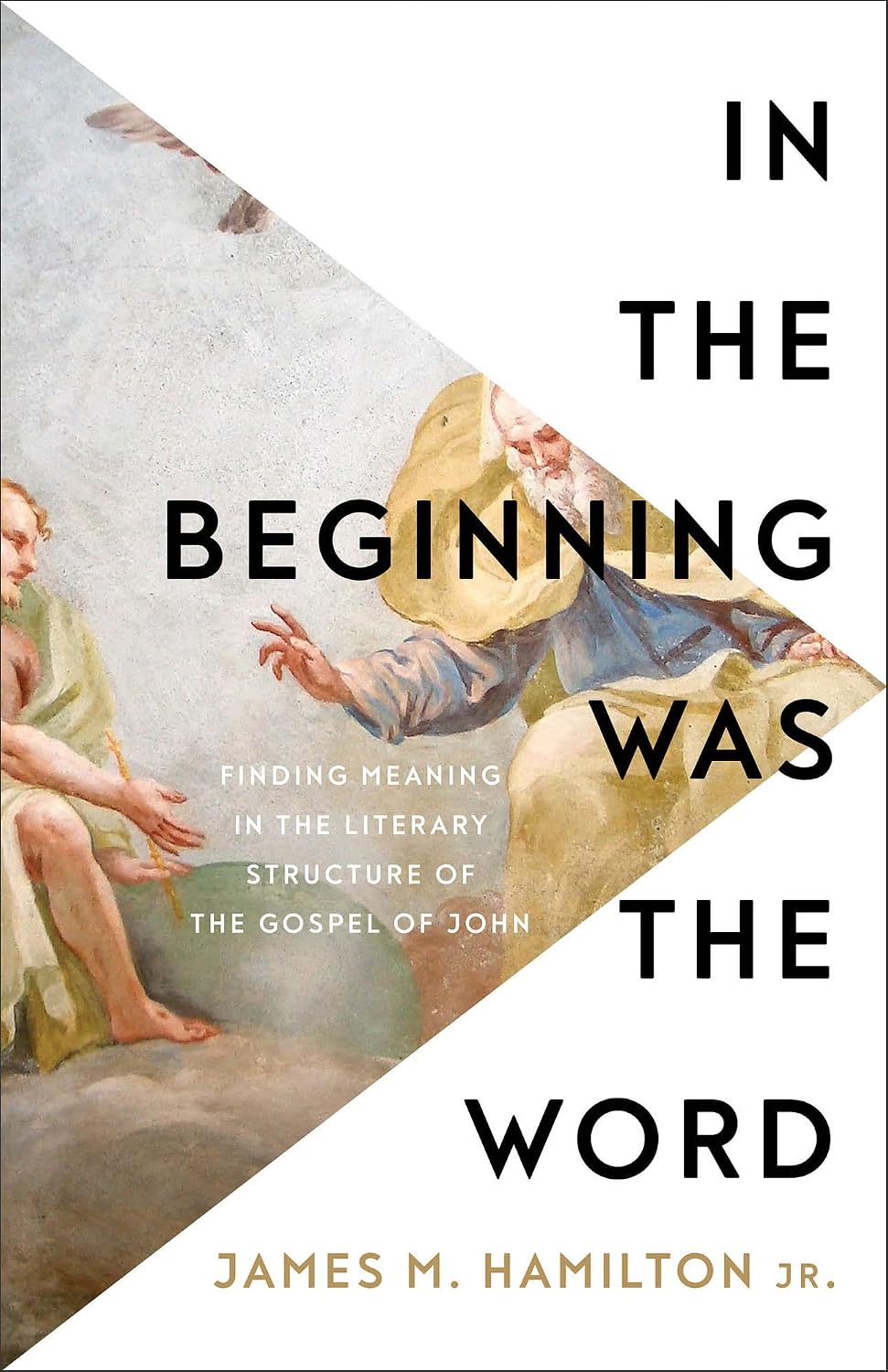
In the Beginning Was the Word
Finding Meaning in the Literary Structure of the Gospel of John
James M. Hamilton Jr.
Topics
